 ×
×
×
×

(1).webp)
There was a time when creating a mobile application was considered “nice to have.” Well, that time is gone.
In 2026, if your business isn’t represented on a mobile device, it simply does not exist to your customers. But the catch with this is that it's not enough that you have an app, it has to be intelligent. With features that are intuitive. Features that, quite literally, appear to be able to read the user's mind.
That's where agentic AI comes in. And trust me, it's changing everything about mobile app development.
Consider how expectations have shifted. The previous standard for a good app required it to launch within seconds and run without crashes. The system contained only one function. Users today expect applications to learn their behavior patterns and provide responses before they make any requests. Apps that feel... well, alive. This isn't science fiction anymore. It's just Tuesday for any decent mobile app development company in 2026.
The shift happened fast. One day, we were building apps with preset menus and static features. Currently necessary is the AI agent integration that can learn from users, decide and adapt if user behavior changes at runtime. And honestly? It's pretty exciting.
Okay, now, let me clear it up so everybody knows what AI is all about. Traditional AI is reactive in nature. You ask it a question, it gives you an answer. You ask Siri or Alexa anything, it responds. You type a command, it does it. Agentic AI? Totally different beast. It's proactive. It watches. It learns. It makes decisions. It takes action without you asking.
Imagine this: You open your fitness app every Monday at 6 AM. After a few weeks, the app doesn't just wait for you. It prepares your workout plan Sunday night. Send you a motivational notification at 5:45 AM. Alter your schedule in keeping with how you performed in the past week. Did you ask for any of that?
The app just... knew. That's agentic AI. And it's becoming the backbone of modern mobile app development services.
Here's something interesting. Some three to four years ago, many expectant people were heard saying: "The app boom is already over." After all, everyone already has all the apps they need.
Wrong. Dead wrong. The app boom isn't over. It evolved. Apps aren't just tools anymore. They're experiences. They're personal assistants. They're business engines.
Let me show you what I mean:
Retail apps don't just show products anymore. You will be predicted for what you'd want next week; right after it goes on sale they let you know about it. They suggest outfits based on what you already bought.
Banking apps don't just show your balance. They warn you before you overdraft. They spot unusual charges. They suggest better ways to save money based on your spending patterns.
Food delivery apps don't just list restaurants. They remember your dietary restrictions. They know you always order Thai food on Fridays. They pre-load your usual order with one tap.
This is why businesses are pouring money into android application development and ios development again. Not because they need an app. Because they need a smart app.
Let's focus on an important but still overarching question-that is to say, the question, more than often, deliberately deflected.
Should you develop an Android or iOS app first? The answer most mobile app development company teams will give you: it depends. But here's the real breakdown:
Android owns the numbers game. More devices. More users globally. That is, if you want to reach emerging markets or to maximum reach, android application development will be a fitting choice.
iOS owns the revenue game. While iOS users tend to invest in apps more. Most of the time, they do not mind paying for a premium feature within an app. If your business model relies on in-app purchases or subscriptions, ios app development is often more profitable.
But honestly? In 2026, most businesses need both. That's where cross-platform development comes in. More on that in a bit.
I've seen hundreds of apps come through our doors at ZYNO Digitech. Some succeed. Many don't. Here's what separates the winners from the "download once and forget" apps:
Users will wait maybe two seconds. Maybe. If your app takes five seconds to load, they're gone. The back button is right there. Good app development software and smart architecture make this possible. But it's not just about raw speed. It's about perceived speed. Show something useful immediately, even if everything isn't loaded yet.
Nobody reads app tutorials anymore. If you need an explanation to understand how your app works, you have already failed. The best apps are ones that are familiar, even though they are saying something new. That is genius. That is what separates a great ios app development company from a mediocre one.
There's a fine line separating "this app gets me" from "this app knows too much about me." Agentic AI is living on this line every day. The apps that succeed are transparent about what they know and why. They make users feel understood, not surveilled.
Internet connections drop. Tunnels exist. Planes fly. Apps that completely die without the internet are annoying. Smart apps cache data. They let you do useful things offline. They sync when connection returns. This seems normal, but you'd be surprised how many apps fail in this.
Remember when you had to build your app twice? Once for iOS, once for Android? Yeah, that was expensive. And slow. And it's painful when you want to update something.
Enter cross platform app development.
Tools like React Native and Flutter changed the game. Write your code once. Deploy it everywhere. iOS, Android, sometimes even web. Does it work perfectly for every app? No. High-performance games or apps that need deep system access? You might still need native development. But for most business apps? Cross-platform is the smart move.
Here's why we recommend it to most clients:
Faster time to market. You're not building twice. You launch on both platforms simultaneously.
Lower costs. One codebase means less development time. Less maintenance. Less everything.
Consistent experience. Your users get the same features whether they're on iPhone or Samsung.
Easier updates. Fix a bug once. It's fixed everywhere.
The technology has matured so much that users can't even tell the difference anymore. And that's the point.
Let's get specific about what agentic AI brings to the table.
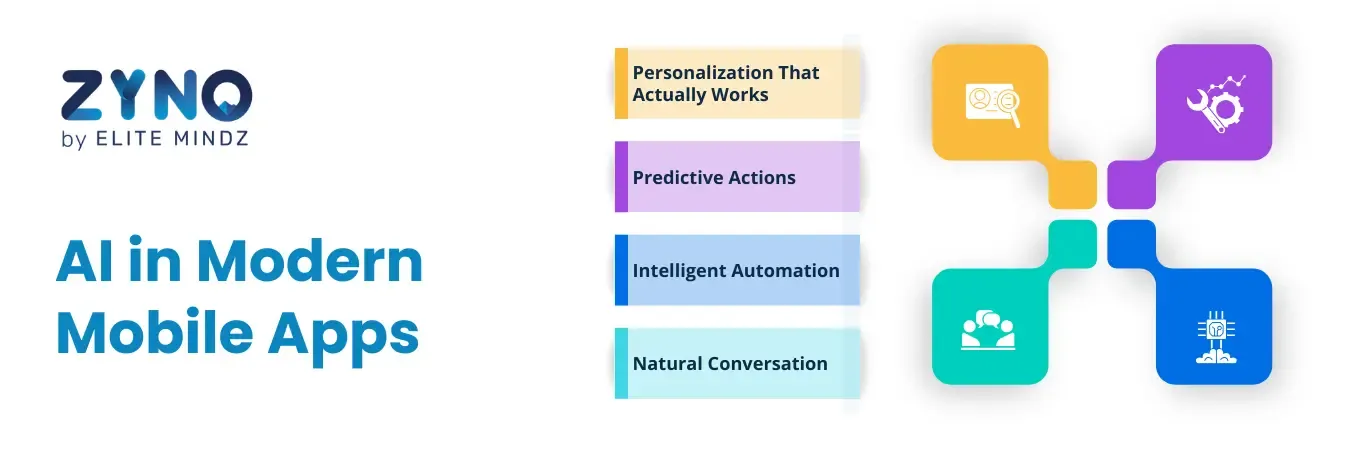
Personalization That Actually Works
Generic "recommended for you" sections? Old news. Modern AI creates unique app experiences for each user.
Your shopping app shows different home screens based on your browsing patterns. Your news app prioritizes topics you actually care about. Your fitness app adjusts plans based on your progress. This isn't just nice to have. It's expected now.
Predictive Actions
This is where it gets cool. The app doesn't wait for you to tell it what to do. It predicts and acts.
Travel apps that automatically check you in 24 hours before your flight. Music apps that download your favorite artists' new releases overnight. Finance apps that move money between accounts to optimize interest and avoid fees. All happening in the background. All without you lifting a finger.
Intelligent Automation
AI handles the boring stuff so users can focus on what matters. Photo apps that automatically organize pictures by event, location, and people. Email apps that draft responses to common messages. Calendar apps that suggest meeting times based on everyone's patterns.
This is what modern mobile development looks like. It's not just building features. It's building intelligence.
Natural Conversation
Chatbots used to suck. Everyone knows this. "I'm sorry, I didn't understand that" became a meme. Not anymore. Modern AI agents in apps can actually understand context. They remember previous conversations. They get nuance.
You can type "reschedule that meeting we talked about yesterday" and the app knows exactly what you mean.
So you've decided you need an app. Smart. Now comes the hard part: picking who builds it. Here's what to look for in the best app development companies:
They Ask Questions Before Giving Answers
If a company quotes you a price in the first meeting, be suspicious. Good developers need to understand your business first. What problem are you solving? Who are your users? What do they need? What do they expect? These questions matter more than technical specs.
They Have Apps You Can Actually Try
Portfolio matters. But don't just look at screenshots. Download their apps. Use them. Do they work smoothly? Are they intuitive? An ios app development agency that builds beautiful apps that crash constantly? Not worth your time.
They Talk About Strategy, Not Just Code
Building an app is easy. Building the right app is hard. Great development partners help you figure out what features actually matter. They challenge your assumptions. They save you from building things users don't want.
They're Transparent About Timeline and Costs
Nobody likes surprises. Especially expensive ones. Good agencies break down costs clearly. They explain what might change the timeline. They communicate when things go off track.
They Plan for After Launch
Launch day isn't finished. Your app will need updates. Bug fixes. New features. Make sure your development partner has a plan for ongoing support. Many companies build an app then disappear. That's a problem.
Let’s talk about something critical: security.
Users trust your app with their data. Sometimes sensitive data. Payment information. Health records. Personal messages.
One breach, and you're done. Trust destroyed. Users gone. Possible lawsuits.
Here’s what truly matters in mobile app development security:
Everything must be encrypted. Data in transit. Data at rest. No exceptions. This isn’t a premium feature. It’s the baseline.
Passwords alone aren’t enough anymore. Two-factor authentication. Biometric login. OTP verification. And please, never store passwords in plain text. Hash and salt them properly.
Your APIs are doors into your system. Lock them. Use token-based authentication (JWT, OAuth). Validate every request. Rate-limit access. Prevent API abuse.
Not every user should access everything. Limit permissions based on roles. Minimize internal and external risk by applying the principle of least privilege.
Security starts at the code level. Prevent SQL injection. XSS. CSRF. Validate all inputs. Sanitize all outputs. Use updated, trusted libraries, no outdated dependencies.
Threats evolve. What was secure last year may not be secure today. Conduct vulnerability assessments and penetration testing regularly. Patch issues immediately. No delays.
Protect your app from reverse engineering. Use code obfuscation. Detects rooted or jailbroken devices. Block debugging and tampering attempts.
Never store sensitive data unnecessarily. Avoid storing tokens, credentials, or personal data locally without encryption. Use secure keychain/keystore mechanisms provided by iOS and Android.
Security is also legal protection. GDPR. CCPA. HIPAA. PCI-DSS. Understand what applies to your industry, and comply fully.
Collect only what you truly need. Be transparent about how data is used. Give users control over their information. Security isn’t just technical. It’s ethical.
Set up logging and monitoring systems. Detect unusual behavior early. Respond fast before small issues become major breaches.
Security isn’t an add-on. It’s the foundation of trust. And without trust, your app doesn’t stand a chance.
Let me describe it in detail, working with a mobile app development team looks like.
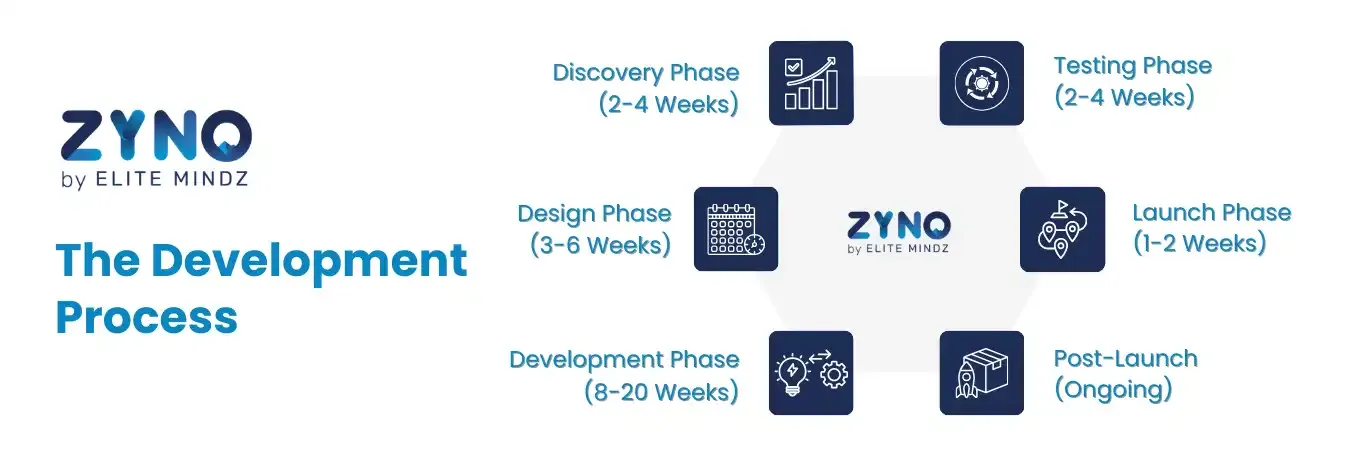
This is where we decide exactly what we're building and why. Lots of questions. Lots of planning. Lots of coffee. You'll create user stories. Map out features. Design basic wireframes. Set priorities. This phase is critical. Rush it and you'll pay later.
Now we make it pretty. And functional. Those aren't the same thing. You'll see mockups. Try prototypes. Iterate on the user experience. Expect revisions. This is normal. Better to change pixels now than code later.
This is where the magic happens. Developers turn designs into actual, working software. You'll see progress in sprints. Usually two-week chunks. Regular demos. Constant feedback.
Breaking things on purpose to find problems before users do. Quality assurance teams test every feature. Every edge case. Every possible way users might break your app.
Final builds are packaged, documented, and securely handed over, including source code, credentials, and deployment files. Servers are configured, environments optimized, and full product ownership is transferred with no loose ends.
App store submission. Waiting for approval. Marketing prep. Server monitoring. Launch day is exciting. But it's also stressful. Things can go wrong. Good teams plan for this.
Monitor. Gather feedback. Fix bugs. Plan updates. The first month after launch is critical. User reviews come in. Usage patterns emerge. You always learn what works and what doesn't.
Hard truth time: Most apps fail. They get downloaded a few times. Used once or twice. Then deleted. Or worse, downloaded once and never opened. Here's why:
The fact is, just because one can doesn't necessarily mean that one should. Lacking a reason, there are necessarily no users.
Every extra feature is friction. Every extra step loses users. Simple wins.
Speed kills. Or in this case, slowness kills. Users expect instant. Give them anything less and they're gone.
"Build it and they will come" is a lie. You need a launch strategy. You need ongoing promotion. You need to give people a reason to download.
Early users will tell you what's wrong. Listen to them. Update based on their feedback. Iterate.
The apps that succeed? They avoid these traps. They stay focused. They stay fast. They stay relevant.
Crystal ball time. Where is this all heading?
Agentic AI is just getting started. Apps will become even more proactive. More autonomous. More helpful. Think of apps that coordinate with each other. Your calendar app talks to your navigation app and talks to your messaging app. They work together to optimize your day.
AR has been "the next big thing" for years. But hardware is finally catching up to the promise. Expect more apps using AR for practical purposes. Virtual try-ons. Navigation overlays. Interactive learning.
Typing is already feeling old-fashioned. Voice interfaces are getting good enough to replace many touch interactions. Future apps will be designed voice-first, with touch as the backup option.
Apps will know you scary-well. Your habits. Your preferences. Your needs before you articulate them. Done right, this is amazing. Done wrong, it's creepy. The companies that nail the balance will win.
Single-purpose apps are fading. Users want fewer apps that do more. Payments, Messaging, Shopping, and Services - all inside one ecosystem. Interconnected platforms will win over isolated tools.
As AI and personalization grow, so will regulation. Stricter compliance laws. Greater transparency requirements. User-controlled data permissions. Security won’t be a feature. It will be a competitive advantage.
Faster networks mean real-time experiences. Instant cloud gaming. Live AR rendering. High-speed data sync across devices. Latency will become almost invisible.
Businesses want apps faster. Cross-platform frameworks will dominate. Low-code and no-code tools will grow, especially for internal apps. Speed to market will matter more than ever.
Apps won’t live only on phones. Smartwatches. Smart glasses. Car dashboards. IoT devices. Experiences will move beyond screens into your environment.
Energy-efficient apps. Optimized backend infrastructure. Green cloud hosting. Users and regulators will expect environmentally responsible technology.
At ZYNO Digitech, we don’t just build apps, we build complete digital solutions. Every project starts with understanding why before deciding how. Strategy comes first. Technology follows.
Our team blends business strategy, intuitive design, and robust development to create mobile applications that are not only technically strong but genuinely user-focused. We prioritize seamless user experiences just as much as clean, scalable code, because both matter equally.
We don’t chase trends for the sake of it. Instead, we adopt emerging technologies like AI agents in practical, value-driven ways that enhance usability and solve real business challenges. Innovation should serve a purpose, and that’s exactly how we approach it.
With deep experience working with businesses across India, we understand local markets, payment ecosystems, compliance needs, and user behavior patterns. At the same time, we design and develop applications built to perform on a global scale.
And our commitment doesn’t end at launch. Post-launch optimization, performance monitoring, and continuous improvements ensure your app evolves with your business, because long-term success begins after deployment.
So here's where you're at. You know you need an app. Or maybe you have one that needs serious updates.You know agentic AI is changing the game. You know users expect more than they did even a year ago.The question isn't whether to invest in mobile app development. It's whether you're ready to do it right.
Because half-measures don't work anymore. A mediocre app is worse than no app. It damages your brand. It frustrates users. It wastes money. But a great app? That's a competitive advantage. That's a revenue stream. That's your business in everyone's pocket. Ready to talk about what that looks like for you? Let's build something worth downloading.
Are you looking for a professional advisor for your business?
Complete the form and discuss implementation strategies with our IT expertise.
Get a Quote in Minutes
(2).webp)
The Rise of Agentic AI-Powered Mobile Apps
Read More →
2026 Mobile App Trends: AI-Powered Experiences & Smarter UX Design
Read More →
ZYNO Digital fuels smarter digital growth through data-driven marketing, creative storytelling, and performance strategies that boost visibility, engagement, and measurable business outcomes across global platforms.

ZYNO Tech delivers cutting-edge IT solutions — including web, mobile, and digital transformation services — helping businesses scale efficiently, innovate faster, and stay ahead in a connected world.

ZYNO AI harnesses the power of artificial intelligence to automate processes, enhance decision-making, and deliver predictive insights — driving innovation, agility, and measurable business growth.

ZYNO by Elite Mindz offers AI-powered products and services that unify operations, boost productivity, and drive digital transformation — helping businesses scale smarter and innovate faster.
* In just 2 mins you'll get a response
* Your idea is 100% protected by our Non-Disclosure Agreement